The book teaches the system. The workbook installs it.
Understanding is not the same as change. The workbook gives you the daily tools, templates, trackers, and reflection surfaces to turn the seven-layer operating system into lived practice.
Use it when you want a next rep, not another idea. Start with Chapter 1, pick the layer that is leaking momentum, then use one workbook surface for the week.
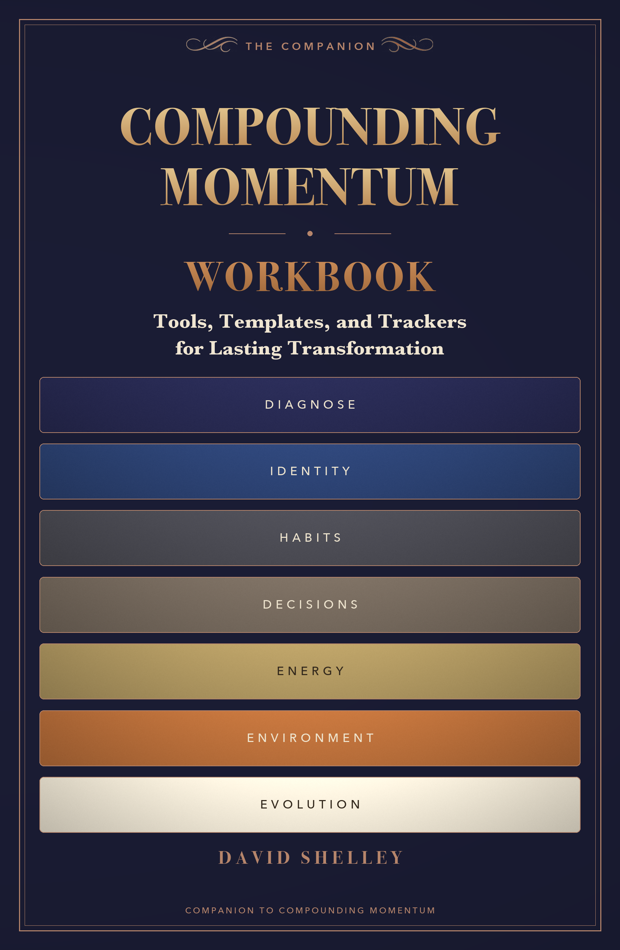
Open the workbook at the point of friction.
Use this page as a routing surface: diagnose the layer, pick one worksheet, then review weekly instead of trying to complete every template at once.
- FirstName the stuck layer.Run Chapter 1 and the Seven-Layer Audit before filling templates.Start the diagnostic
- ThenChoose one daily surface.Use the worksheet or tracker that matches the layer you are changing this week.Review the system
- FinallyCheck format status.Use the buy route for live Kindle access and workbook availability details.Compare formats
Use the workbook when the next rep is clearer than the next idea.
Pick the route that matches your current state. The page should help you keep moving whether you are diagnosing, practicing, checking availability, or asking a question before buying.
Nine implementation tools across the seven layers.
Worksheets for defining the self your behaviors can actually emerge from.
Templates for making the desired behavior easier than the default pattern.
A practical way to monitor physical, emotional, cognitive, and relational energy.
A simple daily launch protocol that connects identity, action, and attention.
A closing loop for seeing what worked, what drifted, and what to repair tomorrow.
The system in a format that can survive normal life, not just a motivated weekend.
Start with identity and layer diagnosis before changing routines.
Move into habit design, environment, and battery checks for daily reps.
Use evening reflection and the 90-day tracker to repair drift early.
After the first worksheet, choose by evidence.
The workbook route should not end at a list of tools. Use the first seven days to decide whether you need more diagnosis, format access, or a support answer.
Choose the next workbook step by confidence level.
If the tools look useful but the buying path is still not the right next click, this route keeps readers moving without forcing a dead end.
Use the free sample and Seven-Layer Audit to name the layer that actually needs practice before opening templates.
Start with the sampleSee how the workbook supports the main system so the worksheets feel connected to the full sequence.
Review the book pathMove to the buy page for live Kindle options and current workbook status before choosing a format.
See buy optionsChoose the workbook when you are ready to turn insight into reps.
The workbook is not a second theory book. It is the place to capture decisions, rehearse the layer you are changing, and keep the next 90 days visible.
Workbook links remain unavailable until live product URLs are confirmed, so the safest live path is still the free sample or Kindle route.
Use Chapter 1 and the Seven-Layer Audit first if you are unsure which layer is actually blocking momentum.
Pair each chapter with one worksheet or tracker so the idea becomes a visible behavior, not just a highlighted paragraph.
Use the reflection and 90-day tracker to spot drift early, repair the system, and keep progress from depending on motivation.
Best read beside the book.
Read a chapter, then turn the idea into a worksheet or a tracker. The workbook is deliberately practical: less theory, more installation.
Start with the main book so the seven-layer diagnosis and sequence make sense before you fill in templates.
Read about the bookUse the workbook as the daily operating surface: identity notes, habit design, energy checks, reflection, and 90-day tracking.
See buy optionsUse the route that matches your next question.
This final checkpoint keeps the workbook page useful even when the reader is not ready to buy yet.