When progress feels too slow to trust.
Answer first: slow progress needs evidence before expansion. Measure the smallest useful signal, protect the cadence that created it, and review the proof before redesigning the system.
Quick answer
What should you do when progress feels too slow to trust?
Measure the smallest useful signal, protect the cadence that created it, and review evidence before redesigning the system.
The danger is not slow improvement. The danger is deleting a working loop because the proof has not been made visible yet.
Slow signal
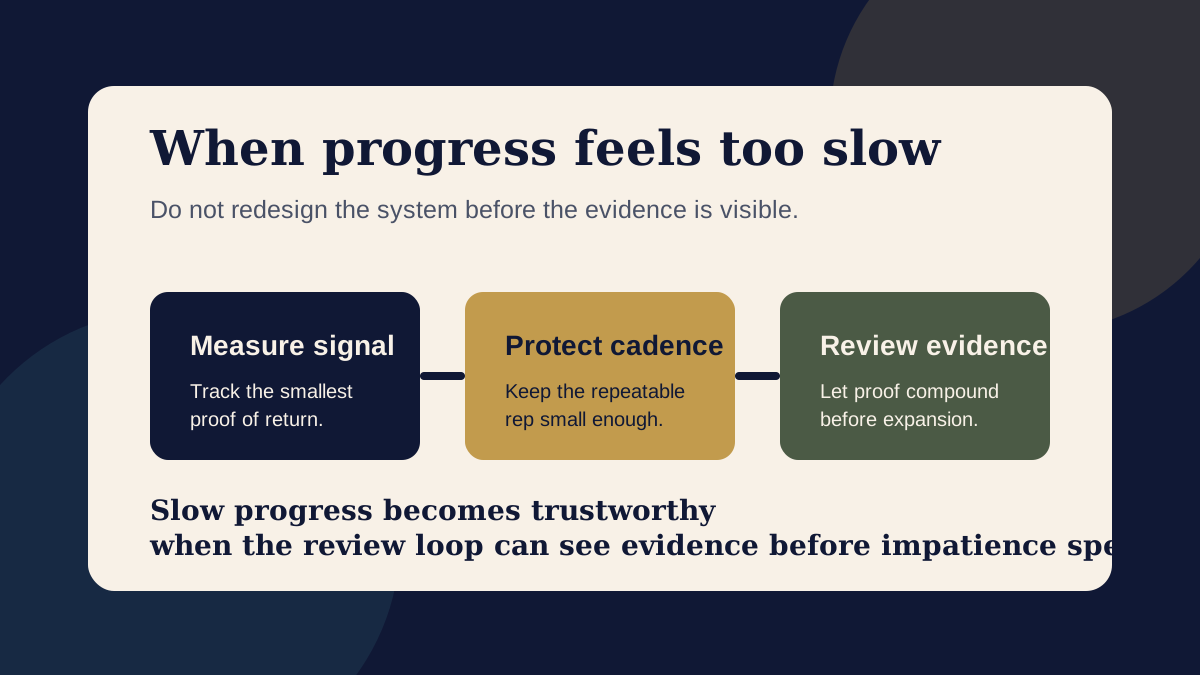
Progress becomes trustworthy when the review loop can see it.
A habit can be working before it feels impressive. If the evidence is invisible, impatience starts writing a new plan. The useful move is to make the signal small enough to notice and the cadence small enough to protect.
- Measure signal
- Track the smallest proof that the useful route is returning.
- Protect cadence
- Keep the rep repeatable before adding volume, tools, or pressure.
- Review evidence
- Look at the trend before deciding the system needs a redesign.
The three-step slow-progress check.
- Name the signal before you judge the size. Count returns, recovery time, easier starts, fewer missed cues, or one finished small rep.
- Protect the cadence before you add intensity. If the rep is starting to repeat, do not make it bigger until the return path is stable.
- Review the evidence before you redesign. Let the proof survive one review cycle before deciding that the whole system is too slow.
Why slow progress can feel like failure.
Fast change gives the ego a dramatic signal. Slow change gives the system a durable one. The problem is that durable signals are often quiet: you return sooner, resist one old cue, recover without a speech, or complete a smaller rep without needing a new identity declaration.
In Compounding Momentum, that quiet evidence matters because behavior is only one layer. If the deeper layers are becoming less hostile to the useful route, the progress may show up first as reduced friction, not visible transformation.
Practical examples
What counts as evidence worth trusting?
- Reading: you returned to the book twice without needing to restart the chapter.
- Writing: the draft opened faster because the next prompt was already waiting.
- Exercise: you completed the smaller session before debating the perfect plan.
- Planning: you reviewed the week without turning the review into self-attack.
- Recovery: a missed rep became a same-day return instead of a week-long reset.
Connect slow progress to the right layer.
If motivation has returned but the route is still fragile, read when motivation returns before the system is ready. If the system has gone quiet, read restart when the system goes quiet. If one missed rep becomes a full restart, read habit recovery without starting over.
Use this script
The two-minute slow-progress review.
Use this before impatience turns an improving system into another reset.
- The smallest proof is...
- Name the signal that shows the useful route is easier than before.
- The cadence to protect is...
- Choose the repeatable version that should stay small for now.
- The next adjustment is...
- Change one friction point only if the same break keeps appearing.
When the workbook helps.
A single impatient day may only need the review above. A repeated pattern of deleting slow progress needs a practice surface. The Companion Workbook helps when you need weekly evidence, smaller review prompts, and a way to separate signal from mood.
If you are still deciding whether the system is working, start with Chapter 1 and the Seven-Layer Audit. Diagnose what kind of evidence would make progress believable before you increase the target.
Take the smallest useful next step.
If progress feels too slow, choose one route that makes evidence visible before you change the system.