When a useful habit becomes invisible.
Answer first: do not replace the habit just because the proof got quiet. Mark the smallest useful signal, shrink the proof until you can record it, and keep one review loop before changing the plan.
Quick answer
What should you do when a useful habit becomes invisible?
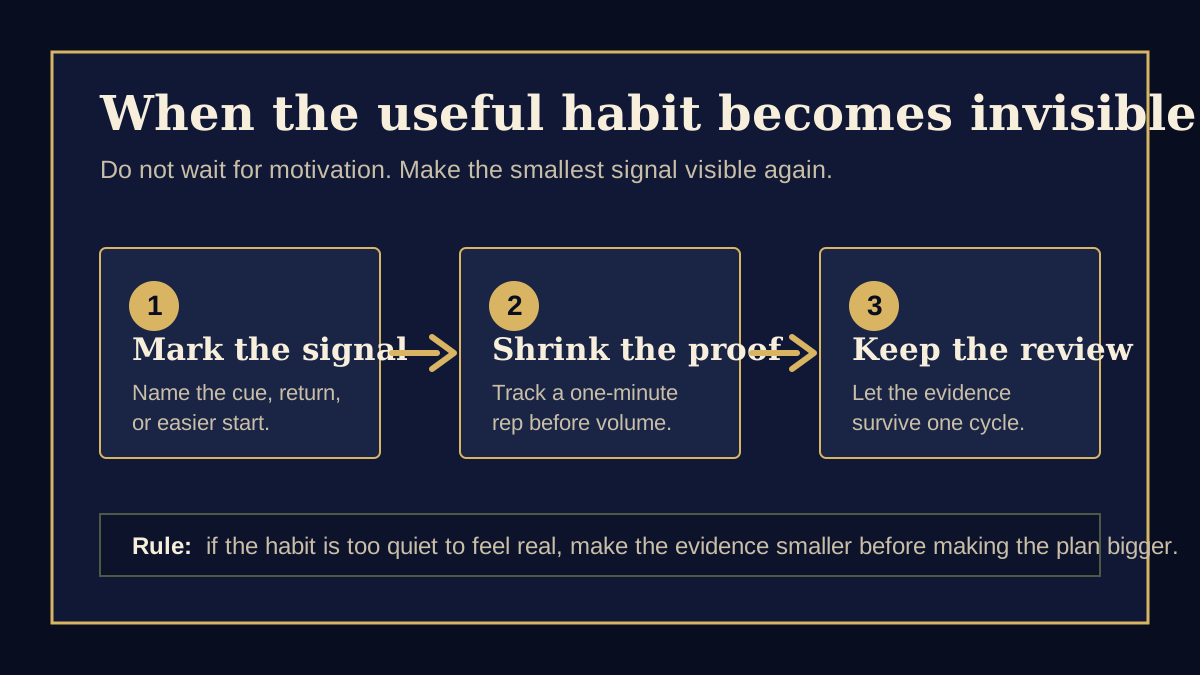
Mark the smallest useful signal, shrink the proof until it is easy to record, and keep one review loop before changing the plan.
The problem is not always that the system stopped working. Sometimes the system became ordinary enough that you stopped noticing it.
Quiet evidence
A habit can become normal before it becomes impressive.
Useful habits often disappear into the day once they stop feeling dramatic. That is good for stability and bad for confidence. Without a visible signal, the mind starts treating quiet consistency as absence.
- Mark the signal
- Name the cue, return, easier start, or same-day recovery that proves the route still exists.
- Shrink the proof
- Record a one-minute rep, one crossed-off cue, or one return before measuring volume.
- Keep the review
- Let the evidence survive one review cycle before deciding the plan is too small.
The invisible-habit check.
- Ask what has become easier. Look for reduced friction before looking for bigger results.
- Record a smaller proof than your ego wants. The proof has to fit low-energy days or it will disappear again.
- Review before expanding. A habit that is just becoming stable is not ready to carry extra complexity yet.
Why invisible progress creates false resets.
At first, a useful habit feels like an event. You notice the new cue, the new notebook, the new time block, or the unusual burst of restraint. After a while, the same route can become ordinary. You return faster. You argue less with the cue. You miss and recover without a speech.
That ordinary quality is exactly what a behavior system is trying to create. But if the review loop does not capture it, the mind reads ordinary as stale and starts shopping for a more dramatic system.
In Compounding Momentum, this is why the signal layer matters. The visible proof does not need to be large. It needs to be specific enough that the deeper layers stop treating quiet progress as failure.
Practical examples
Signals worth marking.
- Return speed: you came back the same day instead of waiting for Monday.
- Start friction: the first rep took less negotiation than last week.
- Environment: the useful tool was already visible when the cue arrived.
- Identity: one miss did not turn into a verdict about who you are.
- Review: you looked at the evidence without turning it into self-attack.
Connect the invisible habit to the right note.
If the evidence is real but too quiet, read when progress feels too slow to trust. If the cue disappeared entirely, read restart when the system goes quiet. If a missed rep became a reset, read habit recovery without starting over.
Use this script
The two-minute visibility review.
Use this before changing a habit that may only need a better evidence surface.
- The signal I can mark is...
- Choose one visible proof that the useful route still exists.
- The smallest proof is...
- Make the evidence easy enough to record on a low-energy day.
- The review date is...
- Pick the next point where you will judge the trend, not the mood.
When the workbook helps.
A single quiet week may only need the visibility review above. A repeated pattern of losing trust in ordinary progress needs a steadier practice surface. The Companion Workbook helps when you need to track the signal, review the week, and stop redesigning every time the habit becomes less dramatic.
If you are still deciding whether the seven-layer frame fits, start with Chapter 1 and the Seven-Layer Audit. Name the layer before adding another habit tracker.
Take the smallest useful next step.
If the habit has become invisible, choose one route that makes evidence visible before you change the system.