When consistency starts to feel brittle.
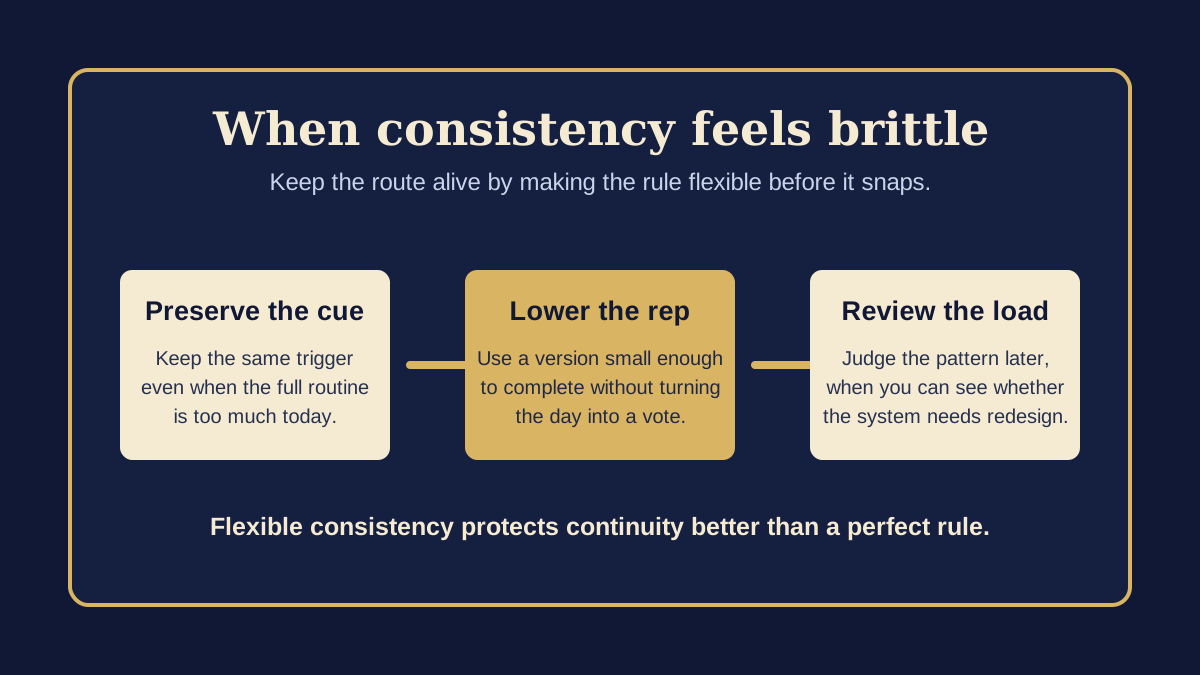
Answer first: do not make one hard day vote on the whole routine. Preserve the cue, lower the rep, and review the load later.
Quick answer
What should you do when consistency starts to feel brittle?
Preserve the cue, lower the rep, and review the load later instead of treating one hard day as proof that the whole routine failed.
The goal is not to become casual about the promise. The goal is to stop a useful promise from becoming so rigid that a normal stressed day breaks it.
Flexible consistency
A brittle routine usually needs range before it needs replacement.
A strong system has more than one acceptable size. The cue can stay stable while the rep changes to fit the day.
- Preserve the cue
- Keep the start signal intact so the day still knows where the habit belongs.
- Lower the rep
- Choose the smallest honest version that protects continuity without pretending the day is normal.
- Review the load
- Decide later whether this was one heavy day or a sign that the routine is carrying too much.
The brittle-consistency check.
- Keep the doorway. Start at the same cue, place, or moment even if the work becomes tiny.
- Make the rep flexible. Define a floor that still counts before the day forces an all-or-nothing choice.
- Move judgement into review. Do not redesign the system in the exact moment it feels too tight.
Why perfect rules snap.
A routine often becomes brittle after it has worked for a while. The rule earns trust, so the mind starts protecting the rule instead of the outcome. Then a crowded day arrives and the routine offers only two choices: complete the full version or fail.
That is not discipline. It is a narrow operating range. In Compounding Momentum, the useful layer is the one that keeps the system returning under ordinary pressure. A cue that survives is more valuable than a perfect rep that only works on ideal days.
Flexible consistency keeps the identity intact: you are still the person who returns to the route. The daily rep simply gets resized so the route can survive the day you actually have.
Practical examples
Flexible versions that still count.
- Writing: open the draft and write one useful sentence instead of abandoning the session.
- Training: do the warmup and one set instead of turning a full workout into nothing.
- Reading: read one page at the planned time instead of waiting for the perfect block.
- Planning: choose tomorrow's first action instead of completing the whole review.
- Recovery: clear the cue for tomorrow instead of calling the streak broken.
Connect brittle consistency to the right note.
If the problem is that the work feels unrewarding, read when a habit needs less feedback. If the habit is working but hard to notice, read when a useful habit becomes invisible. If one miss is becoming a full reset, read habit recovery without starting over.
Use this script
The flexible-consistency rule.
Use this when the full routine is too large but the cue is still worth protecting.
- The cue I will preserve is...
- Name the moment, place, or trigger that keeps the route alive.
- The smaller rep is...
- Define the version that still counts on a heavy day.
- The review question is...
- Ask whether the routine needs more range, not whether you are disciplined enough.
When the workbook helps.
A single brittle day can be handled with the flexible rule above. A repeated pattern of all-or-nothing routines needs a better practice surface. The Companion Workbook helps when you need floors, cue options, and review loops that keep consistency from depending on perfect conditions.
If you are still naming the layer, start with Chapter 1 and the Seven-Layer Audit before adding more pressure.
Take the smallest useful next step.
If consistency feels brittle, choose one route that protects the cue before you rebuild the routine.